Beer is one of the most enjoyed alcoholic drinks across the world, but many people still wonder how it fits into a balanced lifestyle. Questions like how many calories in a beer, does beer make you fat, does beer increase weight, and does beer increase cholesterol are common, especially among people who are mindful about fitness, food choices, and overall health.
The simple answer is that beer can be enjoyed responsibly, but the impact depends on serving size, alcohol percentage, drinking frequency, food habits, and lifestyle. According to NIAAA, one standard beer serving is usually 12 fluid ounces of regular beer at about 5 percent alcohol by volume. USDA-based nutrition data commonly lists a regular 12 ounce beer at around 153 calories.
How Many Calories in a Beer?
The answer to how many calories in a beer depends mainly on four things: beer type, alcohol content, serving size, and ingredients. A light beer generally has fewer calories, while stronger beers, craft beers, IPAs, and stouts usually contain more calories because they often have higher alcohol content and more residual carbohydrates.
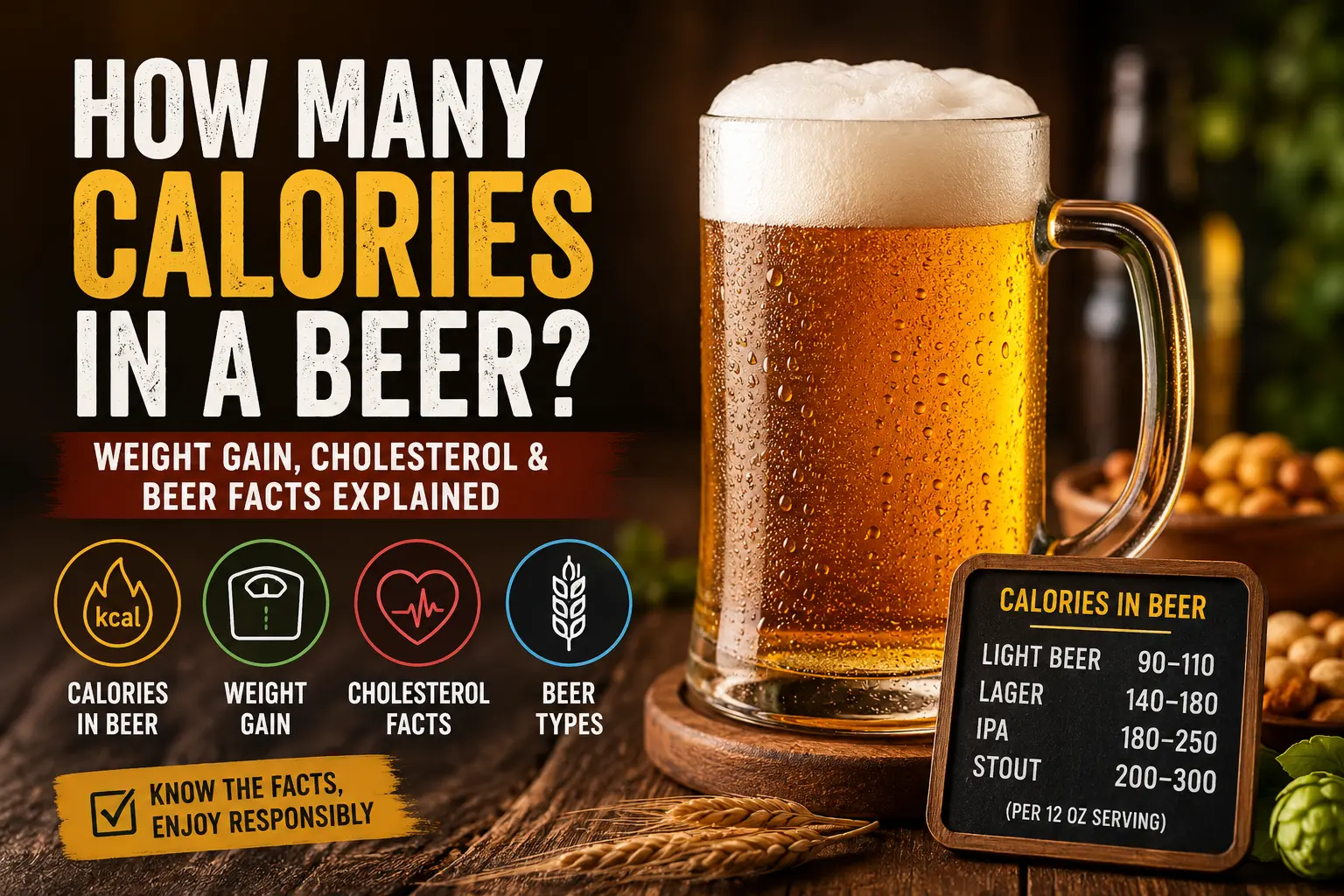
On average, a regular beer contains around 140 to 180 calories per standard serving, while light beer may contain around 90 to 110 calories. Strong beer, double IPA, or rich stout can go above 200 calories per serving.
Average Beer Calories by Type
| Beer Type | Average Calories |
|---|---|
| Light Beer | 90 to 110 |
| Lager | 140 to 180 |
| IPA | 180 to 250 |
| Stout | 200 to 300 |
This beer calorie chart gives a general idea, but exact values vary from brand to brand. For example, a low alcohol light beer may be closer to 100 calories, while a strong craft beer can contain as many calories as a small snack.
Light Beer vs Strong Beer Calories
Light beer is usually made with lower alcohol and fewer carbohydrates, so it often has fewer calories. Strong beer has a higher alcohol percentage, and alcohol itself contributes calories. This is why a strong beer can feel similar to a normal beer in serving size but still add more calories to your daily intake.
Calories in Lager
When people search for calories in lager, they are usually looking for regular beer calories. Most lagers sit around 140 to 180 calories per standard serving. They are usually lighter than stouts and many IPAs, but serving size still matters.
Serving Size Matters
One of the biggest mistakes people make is counting “one beer” without checking the bottle or can size. A 330 ml bottle, 500 ml can, and 650 ml bottle will not have the same calorie count. A 650 ml bottle can easily contain almost double the calories of a smaller serving.
So, when asking how many calories in a beer, always check:
- Bottle or can size
- Alcohol percentage
- Beer style
- Number of servings consumed
Does Beer Make You Fat?
The direct answer is no, beer itself is not solely responsible for fat gain. The real issue is total calorie intake. If you regularly consume more calories than your body burns, weight gain can happen. Beer can add to your overall calorie intake, but when enjoyed mindfully, it can still fit into a balanced lifestyle.
This is why the question does beer make you fat should be understood with the right context. A person who drinks occasionally, stays active, eats balanced meals, and controls portions may not gain fat from beer alone. On the other hand, frequent drinking, overeating, late-night snacking, and low physical activity can make weight gain more likely.
The Beer Belly Myth
The “beer belly” is one of the most common myths around beer. Beer does not directly go to your stomach and turn into belly fat. Belly fat usually develops because of long-term calorie surplus, low activity, poor sleep, stress, genetics, and overall diet.
Beer is best enjoyed with balanced food choices because heavy snacks can add more calories than the beer itself. Many people do not gain weight from beer alone. They gain weight from the full drinking pattern around beer.
Snacking While Drinking
The food eaten with beer can sometimes add more calories than the beer itself. For example, one beer may contain 150 calories, but fried snacks can add 400 to 800 extra calories very quickly.
This is why mindful food pairing matters. Instead of only focusing on beer calories, look at the complete plate. A balanced meal with protein, vegetables, and controlled portions is much better than salty, fried, high-fat snacks every time you drink.
Does Beer Increase Weight?
The answer to does beer increase weight is simple: beer can contribute to weight gain if it pushes your daily calories above what your body needs. Weight gain happens when there is a calorie surplus over time.
For example, if your body needs 2,000 calories per day and you regularly consume 2,400 calories including beer and snacks, weight gain may happen. If beer fits within your overall calorie intake and lifestyle, occasional drinking may not necessarily increase weight.
Frequency vs Occasional Drinking
Occasional beer consumption is different from daily or heavy drinking. One beer once in a while may not make a major difference in body weight. But multiple beers several times a week can add up.
Let us say one regular beer has around 150 calories. Drinking three beers adds around 450 calories, before any snacks or meals. If this happens frequently, the extra calories can affect weight management.
Strong Beers vs Light Beers
Strong beers usually contain more calories than light beers. If weight management is a priority, lighter beer options can be a smarter choice. This does not mean strong beer is “bad,” but it should be consumed with more portion awareness.
Can Beer Fit Into a Balanced Lifestyle?
Yes, beer can fit into a balanced lifestyle when consumed mindfully by adults of legal drinking age. CDC defines moderate alcohol use as up to two drinks or less in a day for men and one drink or less in a day for women.
A balanced approach includes:
- Drinking occasionally instead of habitually
- Choosing lighter options when needed
- Avoiding binge drinking
- Staying physically active
- Keeping food choices balanced
- Drinking water alongside beer
Beer can be part of an enjoyable and balanced social lifestyle when consumed with awareness. The key is understanding portions, calories, and how your overall lifestyle supports your choices..
Does Beer Increase Cholesterol?
The question does beer increase cholesterol needs a balanced answer. Beer itself does not contain cholesterol, but alcohol can influence heart health, liver health, triglycerides, and overall metabolic health depending on how much and how often it is consumed.
Cholesterol is usually discussed in two major forms:
LDL cholesterol is often called “bad cholesterol” because high levels can contribute to plaque buildup in arteries.
HDL cholesterol is often called “good cholesterol” because it helps carry cholesterol away from the bloodstream.
Some studies have discussed links between moderate alcohol intake and HDL cholesterol, but this does not mean beer should be used as a health drink. Public health guidance remains clear that, like any alcoholic beverage, beer is best enjoyed responsibly and in moderation. CDC states that excessive alcohol intake may affect cholesterol and triglyceride levels, which is why moderation remains important.
Beer and Cholesterol: What Really Matters?
For adults who enjoy beer occasionally and maintain a healthy lifestyle, beer alone is usually not the main factor behind cholesterol concerns. But if beer is consumed heavily along with fried foods, processed snacks, smoking, low activity, poor sleep, and excess body weight, cholesterol and triglyceride levels may be affected.
So, when asking does beer increase cholesterol, the better question is: what is the overall lifestyle pattern?
Important factors include:
- Total alcohol intake
- Diet quality
- Saturated fat intake
- Physical activity
- Body weight
- Smoking habits
- Family history
- Existing medical conditions
People with existing health conditions should follow their doctor’s advice, while healthy adults can focus on moderation and mindful choices.
Tips for Enjoying Beer Mindfully
Beer can be part of a social lifestyle, but mindful drinking makes all the difference. Here are practical ways to enjoy beer without ignoring fitness and health goals.
1. Be Aware of Portions
Check the bottle or can size. A large bottle may contain more than one standard serving. This helps you understand actual beer calories instead of guessing.
2. Choose Lighter Beers Occasionally
If you are watching calories, light beer can be a better option. It usually has fewer calories than strong beer, stout, or high alcohol craft beer.
3. Avoid Drinking on an Empty Stomach
Drinking on an empty stomach can affect your food choices later. A balanced meal before or with beer can help you avoid overeating.
4. Pair Beer With Balanced Meals
Instead of always pairing beer with fried snacks, try grilled options, lean protein, salads, roasted snacks, or portion-controlled meals.
5. Stay Hydrated
Alcohol can contribute to dehydration. Drinking water between beers can help you feel better and slow down overconsumption.
6. Stay Active
A physically active lifestyle helps balance occasional calorie intake. Walking, gym workouts, sports, or regular movement can support weight management.
7. Enjoy Beer Responsibly & at a Comfortable Pace.
Drinking too much in one sitting can add extra calories quickly, so a mindful pace helps you enjoy the experience better. Mindful drinking is not just about calories. It is also about safety and long-term well-being.
Quick Answers for Featured Snippets
How many calories in a beer?
A regular beer usually contains around 140 to 180 calories per standard serving, while light beer may contain around 90 to 110 calories. Strong beers, IPAs, and stouts can contain 180 to 300 calories depending on alcohol percentage and serving size.
Does beer make you fat?
Beer does not directly make you fat. Fat gain happens when total calorie intake is higher than calories burned. Beer can contribute to weight gain if consumed frequently or paired with high-calorie snacks.
Does beer increase weight?
Beer may contribute to weight gain only when it regularly adds more calories than your body uses. Occasional beer within a balanced diet may not cause weight gain, but frequent drinking can add extra calories over time.
Does beer increase cholesterol?
Beer does not contain cholesterol, but excessive alcohol intake may affect cholesterol and triglyceride levels. Overall lifestyle, diet, activity, and drinking frequency matter more than beer alone.
Conclusion
Beer can be enjoyed as part of a balanced, social, and active lifestyle when consumed with awareness and moderation. The key is understanding how many calories in a beer, how serving size changes calorie intake, and how drinking habits fit into your overall lifestyle.
So, does beer make you fat? Not by itself. Does beer increase weight? It can, if it creates a regular calorie surplus. Does beer increase cholesterol? Beer does not contain cholesterol, but excessive alcohol and poor lifestyle habits can affect cholesterol and triglyceride levels.
The smartest approach is simple: enjoy beer in moderation, stay active, choose balanced meals, stay hydrated, and be aware of portions. This way, beer can remain part of social enjoyment without taking over your health goals.
FAQs
1. How many calories are in one beer?
One regular beer usually has around 140 to 180 calories, depending on brand, serving size, and alcohol percentage. Light beer may have around 90 to 110 calories, while stronger beers can contain more than 200 calories.
2. Does beer make you fat if you drink once a week?
Drinking beer once a week is unlikely to make you fat by itself if your overall diet and activity level are balanced. Weight gain depends on total calorie intake over time.
3. Does beer increase weight more than other alcohol?
Beer can contribute to weight gain like any calorie-containing alcoholic drink. Strong beers and large servings may have more calories than some other drinks, but sugary cocktails can be even higher in calories.
4. Is light beer better for weight management?
Light beer is often lower in calories and carbohydrates, so it can be a better option for people who want to manage calorie intake. However, moderation still matters.
5. Does beer increase cholesterol directly?
Beer does not directly add cholesterol because it does not contain cholesterol. However, too much alcohol can negatively affect cholesterol and triglyceride levels, especially when combined with poor lifestyle habits.
6. Can I drink beer during a weight loss journey?
Yes, some people can include beer occasionally during weight loss if they track calories, avoid overeating, stay active, and drink mindfully. The key is mindful enjoyment.
7. Which beer has the lowest calories?
Light beers and low alcohol beers generally have the lowest calories. Always check the label because calorie content varies by brand and serving size.
8. What causes beer belly?
Beer belly is usually caused by excess calories, low activity, poor diet, and lifestyle habits. Beer may contribute, but it is not the only reason belly fat develops.
Also Read: What Is Draught Beer? Difference Between Draught, Draft & Bottled Beer Explained