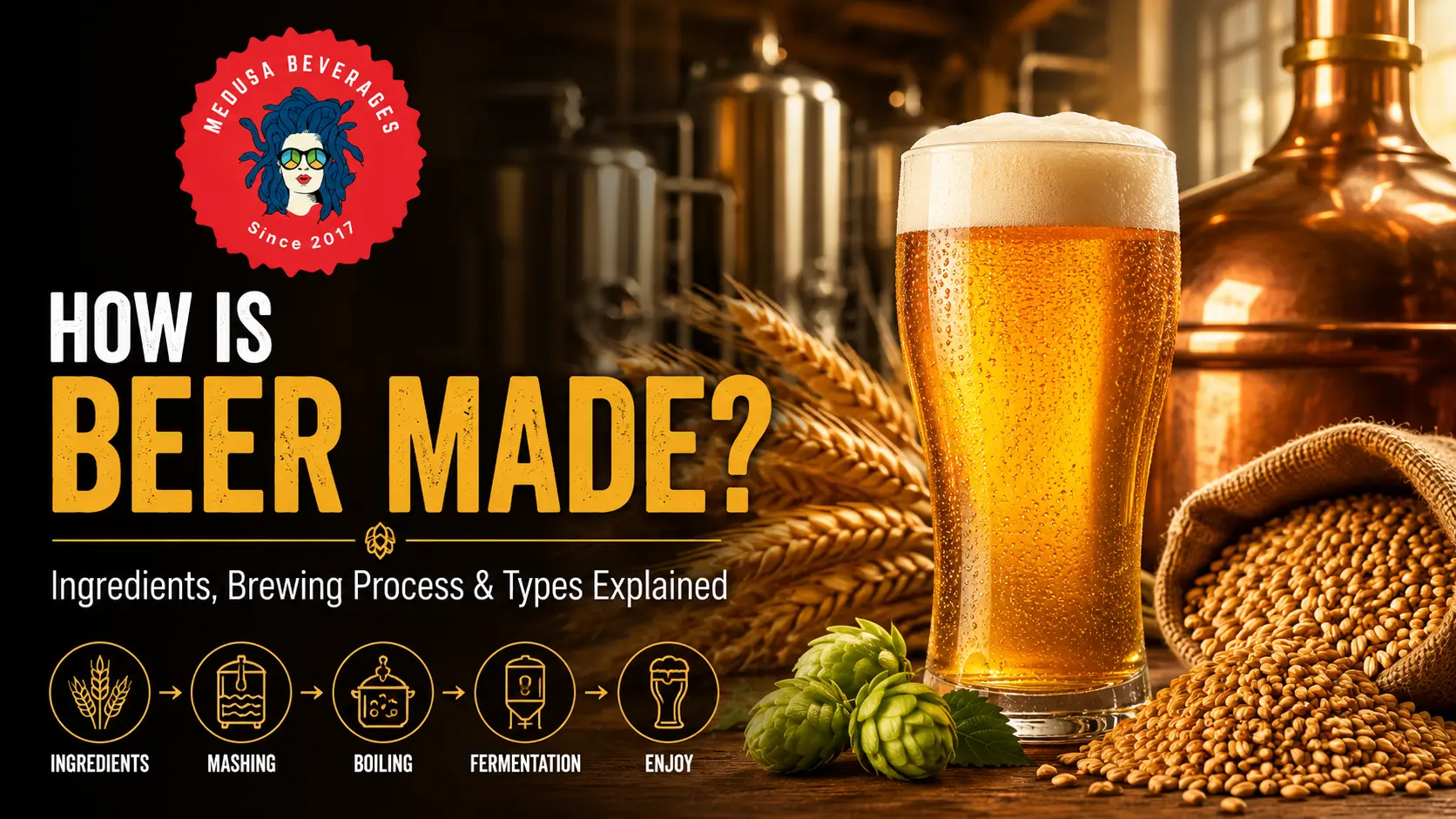
How is beer made? Beer is produced by combining four primary ingredients: water, malted barley, hops, and yeast. The brewing process begins by extracting fermentable sugars from malted grains. The sweet liquid created during this stage, known as wort, is boiled with hops before yeast is added. Yeast then converts the sugars into alcohol and carbon dioxide during fermentation. Finally, the beer is conditioned, filtered, carbonated, and packaged.
Although the basic beer brewing steps are similar worldwide, brewers can change the grains, hops, yeast strains, temperatures, and fermentation methods to create thousands of different beer styles.
This guide explains what beer is made of, how beer is brewed, the complete beer manufacturing process, and the factors that give different beers their distinctive flavors.
What Is Beer Made Of?
The simplest answer to what is beer made of is water, malted barley, hops, and yeast. These four traditional beer ingredients work together to create the drink’s flavor, color, aroma, body, alcohol content, and carbonation.
The basic formula is often described as malt, hops, yeast, water, but brewers may also use wheat, oats, rice, corn, fruits, spices, coffee, chocolate, or herbs to produce specific flavors.
Here are the four main ingredients used in beer.
Water
Water usually makes up more than 90% of beer, making it one of the most influential beer ingredients. Its mineral composition can affect bitterness, mouthfeel, clarity, and fermentation.
For example, water containing higher levels of sulfates can make hop bitterness taste sharper and drier. Water with more chlorides can create a softer, fuller mouthfeel that highlights malt flavors.
Modern breweries often test and adjust their water before beginning the brewing process. Minerals may be added or removed depending on the type of beer being produced.
Even when two brewers follow similar beer brewing steps, differences in water chemistry can make the finished beers taste noticeably different.
Malted Barley
Malted barley provides the fermentable sugars needed to create alcohol. It also contributes to the beer’s color, sweetness, body, foam, and flavors.
Before barley can be used for brewing, it must go through malting. During this process, the grain is soaked in water, allowed to germinate, and then dried in a kiln.
The drying temperature influences the flavor and color of the malt. Lightly kilned malt may produce bread, biscuit, or cereal notes. Darker roasted malt can create flavors resembling caramel, coffee, cocoa, or toasted bread.
Although barley is the most common grain, some beer styles also contain wheat, rye, oats, corn, or rice.
Hops
Hops are the cone-shaped flowers of the hop plant. They provide bitterness that balances the natural sweetness of malt.
Hops also add aroma and flavor. Depending on the variety, they may produce citrus, floral, pine, herbal, tropical fruit, spicy, earthy, or resinous notes.
The timing of hop additions matters. Hops added early during boiling usually contribute more bitterness. Hops added near the end of the boil retain more aroma and flavor.
Some brewers also use dry hopping, which involves adding hops during or after fermentation. This technique increases hop aroma without adding excessive bitterness.
Yeast
Yeast is the microorganism responsible for the fermentation process of beer. It consumes fermentable sugars and converts them into alcohol, carbon dioxide, and numerous flavor compounds.
Brewing yeast is generally divided into two main categories:
- Ale yeast ferments at warmer temperatures and can create fruity or spicy flavors.
- Lager yeast ferments at cooler temperatures and usually produces a cleaner, crisper profile.
The selected yeast strain has a major impact on how the final beer tastes. Even when the same malt and hops are used, changing the yeast can create a significantly different result.
How Is Beer Made? Step-by-Step
Understanding how beer is brewed becomes easier when the entire production journey is divided into clear stages. Although individual recipes vary, the following beer brewing steps are commonly used by commercial and craft breweries.
1. Malting
The beer manufacturing process begins with malting. Barley grains are soaked in water to encourage germination.
As the grain begins to sprout, natural enzymes develop inside it. These enzymes will later help convert the grain’s starches into fermentable sugars.
The germination process is stopped by drying the grain in a kiln. The temperature and duration of kilning influence the malt’s color and flavor.
Pale malt is commonly used as the base of a beer, while darker specialty malts may be added to create caramel, nutty, chocolate, coffee, or roasted notes.
2. Milling
After malting, the dried grains are crushed in a mill. This stage is known as milling.
The objective is to break open the grain husks and expose the starchy interior without turning the malt into a fine powder. Proper milling makes it easier for hot water to reach the starches during mashing.
The crushed grain mixture is called grist.
3. Mashing
During mashing, the grist is mixed with warm water inside a vessel known as a mash tun.
The heat activates enzymes in the malt. These enzymes break complex starches into simpler, fermentable sugars.
Temperature control is essential during this part of the brewing process. Lower mash temperatures generally produce more fermentable sugars and a drier beer. Higher temperatures may leave more unfermentable sugars, creating a fuller and sweeter beer.
At the end of mashing, the mixture contains a sweet liquid and the remaining grain solids.
4. Lautering
Lautering separates the sweet liquid from the spent grain.
The liquid, now called wort, is drained through the grain bed. The grain husks act as a natural filter, helping to remove solid particles.
Brewers may rinse the grains with additional hot water in a process known as sparging. This helps extract more sugars from the grain.
The remaining spent grain is often reused as livestock feed, compost, baking material, or an ingredient in other food products.
5. Boiling
The collected wort is transferred to a brewing kettle and boiled.
Boiling serves several purposes. It sterilizes the wort, stops enzyme activity, concentrates sugars, removes unwanted volatile compounds, and prepares the liquid for hop additions.
A typical boil may last between 60 and 90 minutes, although the exact time depends on the recipe.
This stage also helps develop the beer’s final color and flavor.
6. Adding Hops
Hops are usually added at different stages of the boil.
Early additions provide most of the bitterness because prolonged heat extracts bitter compounds from the hops. Later additions contribute more flavor and aroma because they spend less time at high temperatures.
Some brewers add hops after boiling through whirlpool hopping or during fermentation through dry hopping.
The type, quantity, and timing of hops can significantly influence how beer tastes and smells. This is why India pale ales are often intensely aromatic, while many lagers have a more restrained hop character.
7. Fermentation
After boiling, the wort must be cooled quickly before yeast is added. Cooling reduces contamination risk and creates the right environment for yeast.
The cooled wort is transferred to a fermentation vessel, and the selected yeast strain is introduced.
During the fermentation process of beer, yeast consumes sugars and produces alcohol and carbon dioxide. It also creates flavor compounds that may taste fruity, spicy, clean, tart, or slightly sulfurous depending on the strain and temperature.
Primary fermentation can take several days or several weeks. Ales generally ferment faster at warmer temperatures, while lagers usually require cooler and longer fermentation.
This stage is central to understanding how beer is made because fermentation transforms sweet wort into alcoholic beer.
8. Conditioning
Once primary fermentation is complete, the beer is allowed to mature.
This stage is known as conditioning, maturation, or lagering, depending on the style. During conditioning, harsh flavors soften, yeast settles, carbonation develops, and the overall flavor becomes more balanced.
Some beers are conditioned for only a few days. Others, including strong ales and traditional lagers, may mature for several weeks or months.
Additional ingredients such as fruit, coffee, spices, or wood may also be introduced during conditioning.
9. Filtration
Some breweries filter beer to remove suspended yeast, proteins, and other particles.
Filtration can create a clear, visually consistent product and may improve shelf stability. However, not every beer is filtered. Many craft beers, wheat beers, and bottle-conditioned beers are intentionally left hazy.
Unfiltered beer is not necessarily lower in quality. Its cloudy appearance may come from yeast, proteins, hops, or grain compounds that are intentionally retained for flavor and texture.
10. Packaging
Packaging is the final stage of the beer manufacturing process.
Beer may be packaged in:
- Glass bottles
- Aluminium cans
- Kegs
- Casks
- Large tanks for serving directly at breweries
Before packaging, the beer’s carbonation level may be adjusted. Some beer is force-carbonated by adding carbon dioxide under pressure. Bottle-conditioned beer receives a small amount of fermentable sugar and yeast so that carbonation develops naturally inside the bottle.
The packaging must protect the beer from oxygen, heat, and light. Excessive oxygen can create stale flavors, while ultraviolet light can negatively affect hop compounds.
Different Types of Beer
Beer can be divided into several broad categories based on yeast, fermentation temperature, ingredients, color, strength, and flavor.
Ale
Ale is made using top-fermenting yeast at relatively warm temperatures. Ales often have fruity, spicy, or complex flavors.
Popular examples include pale ale, India pale ale, stout, porter, wheat ale, and Belgian ale.
Lager
Lager is fermented with bottom-fermenting yeast at cooler temperatures. It is usually conditioned for a longer period, producing a clean and crisp profile.
Examples include pilsner, Helles, Vienna lager, Märzen, dunkel, and bock.
Stout
Stout is a dark ale made with roasted malt or roasted barley. It may contain coffee, cocoa, caramel, or toasted flavors.
Not every stout is heavy or highly alcoholic. Some dry stouts are relatively light-bodied and easy to drink.
Porter
Porter is another dark beer style featuring roasted, chocolate, caramel, and nutty characteristics. It is closely related to stout but may have a softer roasted profile.
Wheat Beer
Wheat beer contains a significant proportion of malted wheat. It often has a soft texture, refreshing acidity, and high carbonation.
Certain wheat beer yeasts produce banana, clove, citrus, or spice-like flavors.
India Pale Ale
India pale ale, commonly called IPA, is known for its noticeable hop bitterness, flavor, and aroma.
Modern IPAs may feature citrus, pine, mango, grapefruit, passion fruit, or floral notes. Different versions include West Coast IPA, hazy IPA, session IPA, and double IPA.
Sour Beer
Sour beer is produced using specific bacteria, wild yeast, fruit, or controlled fermentation techniques that create tart and acidic flavors.
Popular sour styles include Berliner Weisse, gose, lambic, and fruit sour beer.
What Gives Beer Its Flavor?
Beer flavor comes from the interaction of beer ingredients, brewing techniques, fermentation conditions, and storage.
Malt may provide bread, caramel, biscuit, coffee, chocolate, or roasted flavors. Hops can add bitterness and aromas such as citrus, pine, herbs, flowers, or tropical fruit.
Yeast produces alcohol and fermentation-related flavors. Water chemistry affects how strongly malt sweetness or hop bitterness is perceived.
Mash temperature, boiling duration, fermentation temperature, conditioning time, carbonation, and packaging also influence the final result.
Additional ingredients used in beer, such as fruit, honey, coffee, vanilla, coriander, orange peel, or spices, can create even more distinctive flavor profiles.
Common Myths About Beer
Myth 1: Dark beer is always stronger
Color does not determine alcohol content. A dark stout can contain less alcohol than a pale double IPA. Beer color mainly comes from the type and roasting level of the malt.
Myth 2: All beer tastes bitter
Hops provide bitterness, but bitterness levels vary widely. Wheat beers, fruit beers, malt-forward lagers, and some sour beers may have very little noticeable bitterness.
Myth 3: Beer is made only from barley
Barley is the most common brewing grain, but beer may also contain wheat, rye, oats, rice, corn, sorghum, or other grains.
Myth 4: Cloudy beer is spoiled
Some beers are intentionally hazy or unfiltered. Cloudiness may come from yeast, proteins, wheat, oats, or hop particles and does not automatically indicate spoilage.
Myth 5: Canned beer is lower in quality
Cans protect beer effectively from light and oxygen. The quality depends more on the brewing, packaging, storage, and freshness than on whether the beer is sold in a can or bottle.
Conclusion
So, how is beer made? The process begins with water, malted barley, hops, and yeast. Malt is milled and mashed to release sugars, after which the liquid wort is separated, boiled, and combined with hops. Yeast is then added to begin fermentation, converting sugar into alcohol and carbon dioxide. The beer is conditioned, optionally filtered, carbonated, and packaged.
Understanding the brewing process makes it easier to appreciate why different beers vary in color, aroma, bitterness, strength, and body. Small changes in the beer ingredients, yeast strain, temperature, or beer brewing steps can produce an entirely different style.
FAQs
1. What are the four main ingredients in beer?
The four traditional beer ingredients are water, malted barley, hops, and yeast. Malt provides fermentable sugar, hops contribute bitterness and aroma, yeast creates alcohol and carbonation, and water forms the majority of the finished beer.
2. How is beer made from barley?
Barley is first malted, dried, and milled. It is then mixed with warm water during mashing so that enzymes can convert starches into sugars. The sugary liquid is separated, boiled with hops, cooled, fermented with yeast, conditioned, and packaged.
3. How long does it take to make beer?
The production time depends on the beer style. Some ales may be ready within two to four weeks, while lagers and strong beers may require several weeks or months of fermentation and conditioning.
4. What happens during the fermentation process of beer?
During fermentation, yeast consumes sugars in the wort and converts them into alcohol and carbon dioxide. Yeast also produces flavor and aroma compounds that influence the character of the finished beer.
5. Why are hops added to beer?
Hops add bitterness, flavor, and aroma. They balance the sweetness of malt and can produce citrus, floral, herbal, spicy, pine, or tropical fruit notes. Hops also have natural preservative properties.
6. What is wort in beer brewing?
Wort is the sweet liquid created after malted grains are mashed with water and separated from the grain solids. It contains the sugars that yeast later converts into alcohol during fermentation.
7. What is the difference between ale and lager?
Ale is generally fermented at warmer temperatures using top-fermenting yeast. Lager is fermented at cooler temperatures using bottom-fermenting yeast and is usually conditioned for longer. Ales often have fruitier flavors, while lagers tend to taste cleaner and crisper.
8. Does beer contain yeast after packaging?
Some packaged beers still contain yeast, particularly unfiltered and bottle-conditioned varieties. Filtered commercial beer may contain very little remaining yeast because most of it is removed before packaging.
9. Can beer be made without hops?
Beer can technically be produced without hops, but it may not fit modern legal or commercial definitions in some regions. Historically, brewers used mixtures of herbs and spices called gruit to balance malt sweetness.
10. Why do different beers taste so different?
Different beers taste different because brewers change the malt, hops, yeast, water chemistry, fermentation temperature, conditioning period, and additional ingredients. Even a small change in one part of the brewing process can affect the final flavor.
Also Read: What Are the Best Mild Beers Available in the Indian Market?